
Sean Bw Parker
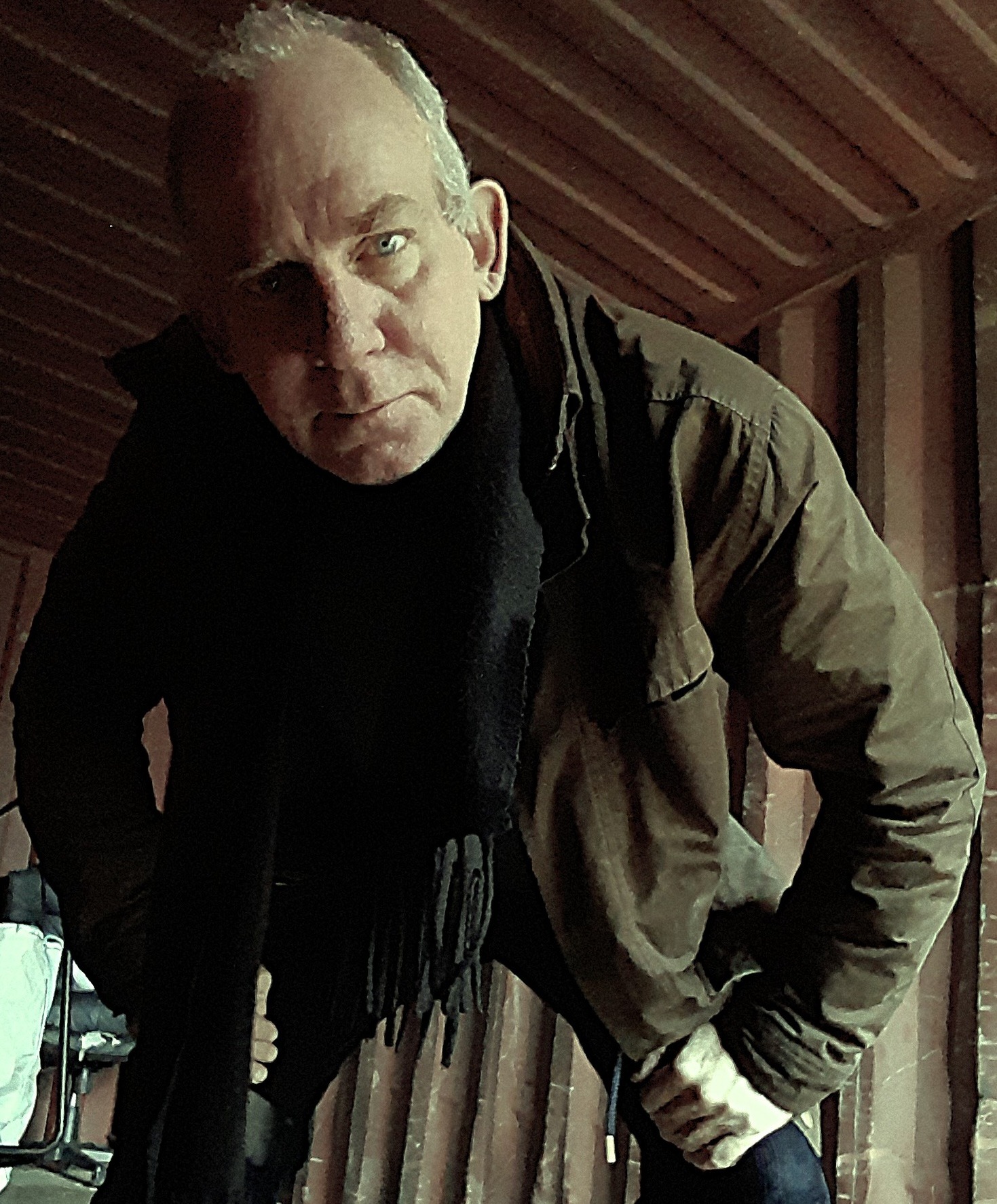
Sean Bw Parker (MA) is an artist, writer and musician specialising in painting, poetry, cultural theory, and the media-justice system. After gaining a Masters degree in Fine Arts from the University for the Creative Arts in 2003, he lived and worked in Istanbul for ten years, has published a number of books and albums, performed at or curated festivals, given a TED talk, and had paintings displayed at London’s South Bank Centre and New York’s Times Square. He won Platinum Koestler Arts awards for play “The Wolfstadt-Wir”e in 2020 and book Compelling Speech-The Stammering Enigma in 2023. He has received endorsements from Nick Cave, Ricky Gervais, Scott Adams, Alain de Botton, and Kristin Hersh, and his 11th book Panopticon (poetry) was published through Close To The Bone Publishing in 2025. He was born in Exeter in 1975 and currently lives on the West Sussex coast.
Artist’s Statement: The Art of Catharsis and The Art of Synthesis. While I’m happy to write about other people’s creative work, writing about my own feels somehow disingenuous, whether that’s about painting or music. It’s so much more interesting when the viewer gives you their own interpretation. That said, the cultural milieu influences my portraits, the paint itself influences my abstracts, and it’s all at its best when I bring them together successfully (though success is a famously subjective term in art). I call this the “Art of Synthesis.” The subject of my paintings tends to be a “jump-off point,” from which I try to let the process, rather than any attempted verisimilitude to the subject, take over. The word “catharsis” was originally a physical or medical term for purging the body. Aristotle applied it to drama in his Poetics, describing the purging of pity and fear from the audience, leading to emotional relief and renewal. I see many of my portraits of figures said to be controversial as the “Art of Catharsis,” as a comedian or playwright might relieve the audience of the politeness and stresses of everyday social life through voicing otherwise hidden instincts and emotions from their position of “granted permission.” The objecthood of the work, rather than any implied message, is the point. Messages may be received, but they’re not intentionally emitted. I love the process of painting-even “painterliness”-and that having its own communicative style, rather than trying to find words to describe it. I try to add whatever is happening in the present moment to “the world of art,” in my own style. My work in painting (and poetry) tends to be “make, then see what I’ve made”-concept follows production, via the subconscious. And another new motto is: “If it doesn’t look like it could have been made by AI, then it’s ‘successful’ enough.”